End of Year Update
Overview
Building on the early work of the independent COVID-19 Evaluation team (outlined in the summer update), over the past few months the Evaluation team has been busy progressing its work programme. This has included reviewing and analysing wide-ranging data and information gathered from public consultation, from stakeholders, experts and officials, and from research reports.
Two public consultations have been conducted since the Evaluation began. A general public consultation, which received over 7,000 responses, and a separate consultation for young people, which received hundreds of responses.
The Evaluation have met and heard from several stakeholder organisations and experts over the past few months, including across the following topic areas: economic, social, rights, behavioural insights and the health sector.
Public Consultations
Consultation and Survey for young people
At the end of September, we ran a survey on the experiences of children and young people during the pandemic. The survey was designed to capture and understand the experiences across education, family life, employment, mental health and wellbeing among other areas.
It received many hundreds of responses from young people, the information from which is now being analysed. A summary of the overall survey findings will be shared on the COVID-19 Evaluation website and feed into the Evaluation’s final report.

An age range of 16 -25 was chosen to capture the experiences of those who were 11 – 20 at the beginning of the pandemic. To inform the survey the COVID-19 Evaluation team carried out initial research, including consulting directly with young people, to understand the key issues that resonated with them, such as education and development, mental health, relationships and milestone events. The Evaluation team collaborated with the youth mental health charity Spunout on survey engagement.
General Public Consultation
The wider public consultation, inclusive of survey material and individual and stakeholder submissions, closed in early September. Over 7,000 personal responses were received. Our team is now finalising this data analysis, which provided rich insights into diverse pandemic experiences and impacts. A high-level overview of this analysis will be shared in the coming months.
The Evaluation is grateful to all individuals and organisations who made submissions, these will form an essential input into the Evaluations work and final report.
The consultation survey grouped questions across a number of overarching dimensions, to understand how the pandemic impacted people’s lives in different ways. Initial high-level analysis of findings from the survey suggests, that:

- The top three issues that were of most concern to respondents during the pandemic were mental health & wellbeing; relationships, social connections & community; and physical health.
- Across the areas that all respondents reported on, the areas with the highest proportion of reported negative impacts were civil liberties, human rights and trust; followed by mental health and wellbeing; work and time use; relationships and connections and physical health.
- However, from the perspective of both students and parents/guardians, the area with the highest proportion of reported negative impacts, by a considerable margin, was education and development.
- When impacts are considered in the round, across numerous quality-of-life aspects, it appears that life stage and circumstances clearly matter. Overall, a person’s financial situation (or level of difficulty in making ends meet) has considerable bearing across dimensions. Having very young children is also very impactful overall, especially for single parents. Age is also very relevant, with younger people feeling considerably impacted across many dimensions. Other cohorts, such as carers and those with a disability, had strong negative impacts across some dimensions. For certain dimensions, such as civil liberties, human rights and trust, there were differing perspectives, such as across gender.
- Respondent’s direct inputs were divided on many issues, largely influenced by their personal situation and their personal perspectives. Issues raised include the importance of protecting mental health, the impacts of school closures, lost time and milestones, societal change & division, risks and challenges for essential workers, communication & information, the extent of overall restrictions, vaccination & healthcare, visiting restrictions in hospitals and nursing homes, losing loved ones and how restrictions affected natural grieving practices.
Additionally, we received 44 written submissions from stakeholders as part of the public consultation, covering a wide variety of areas spanning health and care, businesses and workers, social issues including mental health
and education, and human rights perspectives. These submissions can be viewed here.
Aspects raised within these submissions included how certain sectors or cohorts were disproportionately affected during the pandemic; the necessity of restrictions and related oversight, protocols and communication; to what extent organisations felt engaged and included in decision making; and internal organisational reflections, including the resilience and dedication of staff, and the need to recognise and provide ongoing support to staff.
(Additional stakeholder submissions were sought where there were gaps and in relation to the consulation on the response in long term residential care faciltieis for older persons. These will be published in due course.)
Upcoming consultation on Long Term Residential Care for older persons
In early January 2026, the Evaluation team will begin a dedicated consultation on the response to COVID-19 in long-term residential care facilities for older persons.
This will include a consultation survey on long-term residential care during the pandemic for: Residents’ relatives/significant others; bereaved relatives, who lost loved ones in nursing homes during the pandemic; all staff members, including Director of Nursing / Person in charge; and others such as GPs and geriatricians.
In addition, private group sessions with relatives who suffered bereavement will take place. These listening exercises will be an opportunity for those directly impacted to share their lived experience with the Chair of the Evaluation.
See our ‘Share your Experience’ page for more information on the long-term residential care consultation.
Engagement – Stakeholder & Experts
The Evaluation has undertaken much engagement over the last number of months with a variety of stakeholder organisations and experts, including, recorded roundtable events, workshops and bilaterial meetings and information sessions.
These have focused on societal and economic impacts, health and care, rights, including the rights of children, and wider issues such as communication, education, and public policy.
Economic Roundtable with Stakeholders and Experts
On the 10th of November, the COVID-19 Evaluation panel held a roundtable forum on the economic impacts of the COVID-19 pandemic, chaired by Professor Martina Lawless, Director of the ESRI.
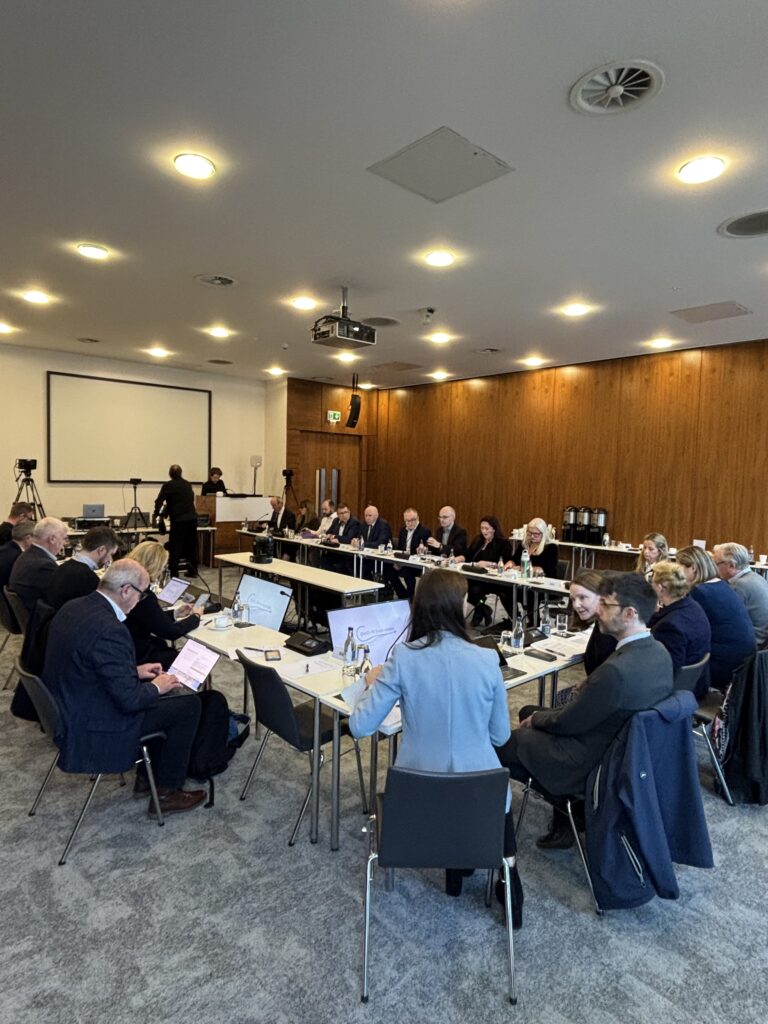
This roundtable event brought together some of Ireland’s main business and worker representative bodies and stakeholders. Each organisation shared how the pandemic, and the measures taken to manage it, impacted their members, employees and industries. Topics spanned enterprise and labour market impacts of pandemic restrictions and mitigating supports. The stakeholders represented a cross section of sectors, including those most impacted by the pandemic response, who outlined their sectors experiences and perspectives, including around engaging with policy makers and the significance of financial supports and wider initiatives.
Inputs and insights from stakeholders, from this economic session, along with the June roundtable with stakeholders representing cohorts across society, will assist the Evaluation panel in assessing overall strengths and weaknesses of the pandemic management, including managing competing sectoral policy objectives.
A complementary economic session involving experts and researchers was also held. It discussed the wider economic approach taken by Government in light of the anticipated impacts of the pandemic and related short- and longer-term consequences. There was a particular focus on sustainable public finances, expectation management, and the wider economic context. The experts and researchers in attendance were
– Mr Seamus Coffey, Chairperson, Irish Fiscal
Advisory Council
– Professor John McHale, University of Galway
– Dr Conor O’Toole, ESRI
– Michelle Murphy, Social Justice Ireland
– Dr Emma Howard, TU Dublin
– Dr Tom McDonald, Nevin Economic Research
Institute
– Associate Professor Frank Walsh, UCD
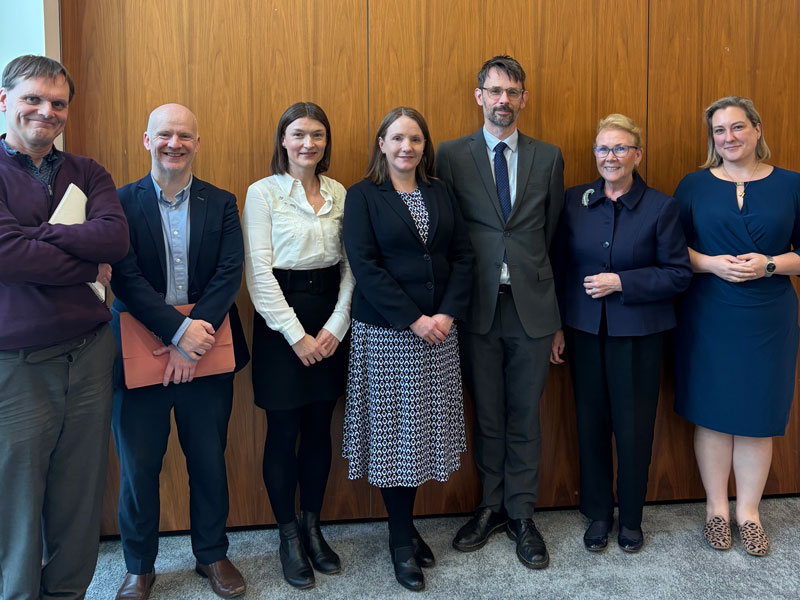
The sessions were chaired by Professor Martina Lawless, Director of the ESRI, with input from the Evaluation chair and members of the Evaluation panel. These sessions can be viewed here.
Wider Engagement
The Evaluation panel is engaging in a series of exploratory discussions with experts, such as researchers from the ESRI, NESC and academic institutions, covering areas such as public policy, behavioural analysis, health and care, psychology and education, and communication. It is also engaging in wider information sessions, in areas such as emergency planning, governance, and data.
It has met bilaterally with specific stakeholder organisations including the Ombudsman for Children, the Irish Human Rights and Equality Commission and Nursing Homes Ireland. It has also been engaging with stakeholders representing marginalised groups, in order to address information gaps from public consultation inputs.
These engagements have provided opportunities for in depth discussion and insights which will inform the final report.
Progress across work programme
Work is ongoing on the compilation and analysis of data and information across the Evaluation’s programme of work, which is being approached as a series of work packages, with a strong overarching and cross-cutting emphasis.
The broad work packages cover a factual account of the management of the pandemic; the health and social care system performance, with a specific module on the response in long-term residential care facilities for older people; social impacts and related lessons; economic impacts and related lessons; and forward-looking guiding principles, processes and framework to assist in strengthening Ireland’s response in future crisis.
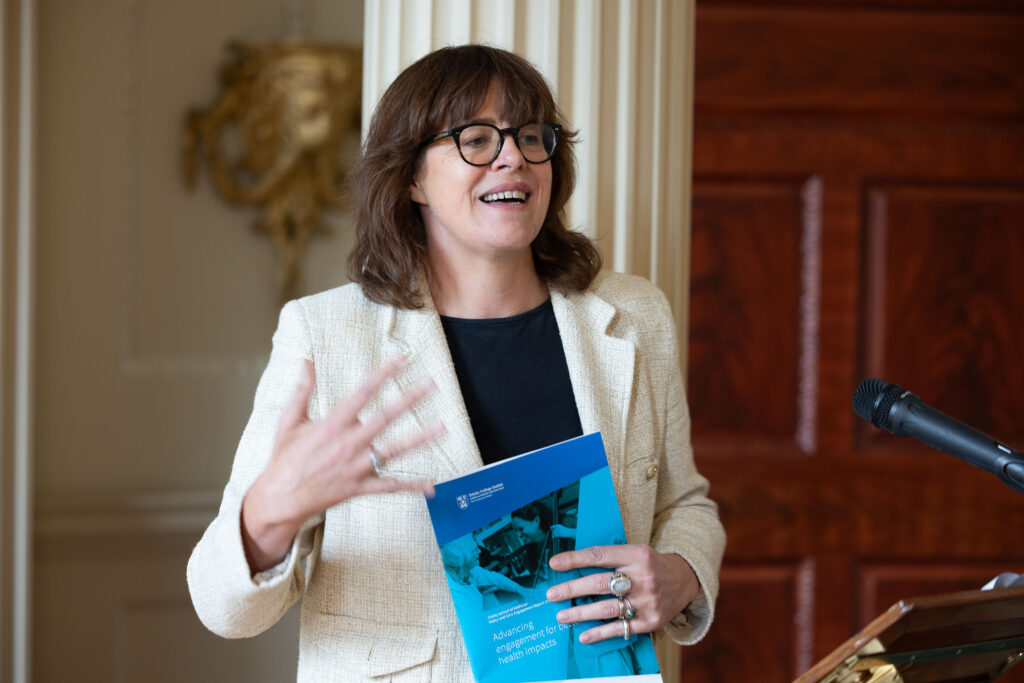
In addition to its engagements with stakeholders, researchers and experts, the Evaluation panel has held seven formal panel meetings to date, covering aspects such as project planning, work packages, consultation and engagement, and research and information.
Furthermore, the Evaluation team has been strengthened over the last number of months, including the recent addition of Professor Sara Burke (right), who has joined as an expert to Evaluation panel, focusing on the health and social care system work package.
Analysis of submissions covering the work and response of Government Departments and agencies continues. This has included drilling down into key processes and outputs across policy areas, to understand decision making approaches and initiatives pursued, including potential lessons for future crisis management. A factual account of the management of the pandemic response will feature as a core part of the final report.
The Evaluation panel has also been increasing its focus on international insights and comparisons, including research and initiating engagement with international experts and organisations.
What’s to come in 2026?
The Evaluation has a busy schedule of numerous engagements, a workshop, and roundtable in the first quarter of 2026.
This will commence in early January 2026, with the launch of a dedicated consultation on the response to COVID-19 in long-term residential care facilities for older persons.
Analysis of the public consultation will be completed and published.
In Spring, a roundtable event with national and international experts focused on health and wider decision-making approaches will take place. This will be followed by private sessions with officials responsible for supporting the management of the pandemic response and in due course private sessions with key decision makers will be held.